Writing tires quickly
Your child avoids writing, tires quickly, or takes a very long time to finish.
 Call 1300 243 348
Request a callback
Call 1300 243 348
Request a callback
When handwriting is slow, tiring or hard to read, occupational therapy can look at what is behind it. Delivered by video, with you guided through practice.
Asking doesn't commit you to anything.
Request a callback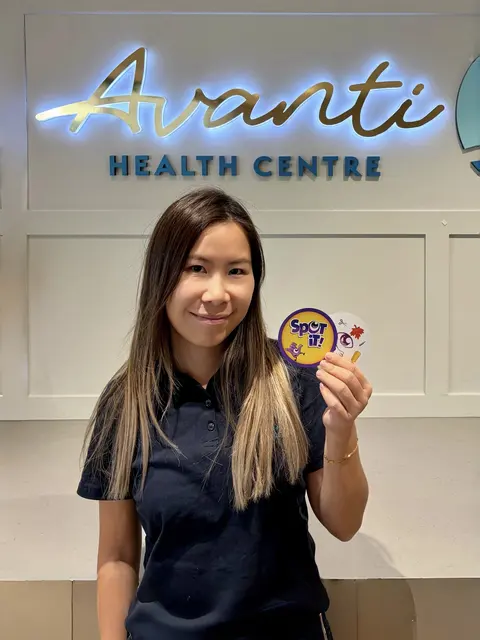
Can we grab your name and email?
Parents and carers can call or enquire on behalf of a child.
An OT looks at grip, posture, letter formation and effort before suggesting a plan.
Your child avoids writing, tires quickly, or takes a very long time to finish.
Spacing, size and letter formation make the work hard to read, even when the ideas are there.
Handwriting is slowing your child down across subjects, not just in one task.
Lin works with children and their parents on handwriting and fine motor skills, and guides the adult through what to practise between sessions.
Occupational Therapist
Lin supports children, young adults, neurodivergent clients and older adults by telehealth when online delivery is suitable.
A first session often starts with a short sample: a sentence, a name or a page of schoolwork. You can look at grip, posture, letter formation and how much effort it takes, then agree something to practise at home.
A phone, tablet or computer with a camera, a stable connection, and a quietish space where you can talk with your child nearby.
The parent or carer usually leads the session, and the therapist can suggest what to notice or try with your child between sessions.
Both parents, a carer or another adult who runs the routine can join, and key points can be shared afterwards.
A short writing sample from home is enough to start. Nothing needs to be prepared in advance.
Grip, posture and letter formation are looked at together, not in isolation.
Focus on one skill at a time, with short practice that fits your child’s week.
Change the pencil, paper, seating or task length before assuming more practice is the answer.
Progress depends on practice between sessions. The OT sets the plan; the parent or carer runs it at home.
These are the areas most often worked on by video. If something needs to be seen in person, the team says so.
This is for families who want practical handwriting strategies, not a diagnosis or a formal report.
Telehealth is not the answer for every request. The team redirects you rather than sell you the wrong format.
Keep it simple. The call is a routing conversation, not an assessment.
No. Diagnosis is not part of this service. The work looks at the functional difficulty and what will help.
No diagnosis is needed to ask. The team talks through what you are noticing and confirms whether occupational therapy fits before anything is booked.
No one can promise that. Online sessions can review technique and set practice, and progress depends on practice between sessions.
Mention it when you call. Ongoing hand pain needs an appropriate in-person or medical assessment first, and the team talks through what that means for your child.
A short writing sample and a sense of how writing goes at school and home is enough to start.
Often, yes. With your permission, the OT can suggest what to ask the school for, such as seating, tools or extra time.
The team confirms fit and funding first. The parent or carer is usually part of the first appointment, which often starts with one routine that is hard. What you work on is agreed with you.
If the work needs to be done in person, the team says so and talks through what else may fit.
Funding options depend on your child and the service. Tell the team what funding you have and they check what applies, then explain any fees before anything is booked.
Tell the team what writing looks like at home and at school and how your child is funded. They check fit, fees and timing, then explain the next step.
Online occupational therapy for handwriting and fine motor skills, with the parent or carer guided through practice. The team confirms suitability before anything is booked.
Can we grab your name and email?